









Brand strategy for companies

Your company has outgrown its brand.

You can feel it. The team describes the company five different ways. You lose deals to competitors who aren't better... just clearer. The brand you launched with no longer fits the company you've become.

Scroll
You Know It's Time When...

The brand you launched with is holding the company back.

01
Your team describes the company five different ways in the same week.
Internal alignment
02
You're losing deals to competitors who aren't better... just clearer.
Market position
03
New hires take months to understand what the company actually stands for.
Onboarding drag
04
Every campaign feels like starting from scratch because there's no foundation to build from.
Marketing cost
05
You've outgrown the brand you launched with, and everyone knows it.
Founder's instinct

None of these are marketing problems. They're positioning problems.

Not a logo project.

Not a brand refresh.

It's the strategic work that tells your team, your market, and your investors exactly what you are.

Positioning. Messaging architecture. Visual identity direction. A brand system your team can execute from... without the founder in every meeting.

01

Positioning.

The one sentence your whole company can stand behind. The answer to "what do you do?" that stops being a guess.

02

Messaging architecture.

Tagline, value propositions, proof points, narrative. What every team says, everywhere, so the story compounds instead of contradicting itself.

03

Voice and visual direction.

How the brand sounds and looks. Not a logo package. A system designers, writers, and agencies can actually build from.

04

Internal alignment.

A rollout plan so sales, marketing, product, and leadership finally describe the company the same way on the same day.

The Spectrum

Where does your brand actually live?

Five positions. Each one has trade-offs. Pick on purpose.

Company Brand Personal Brand
Company Only Shein
Shein
Company only.
Example · Shein, Procter & Gamble, large marketplaces
Strengths
  • Survives leadership changes
  • Easier to sell or merge
  • Scales without any one person
Challenges
  • Trust is harder to build early
  • Higher marketing spend needed
  • Compete on features and price
Best for: Enterprise SaaS, large agencies, marketplaces.
Brian Moynihan
Bank of America
Corporate spokesperson.
Example · Bank of America, Brian Moynihan
Strengths
  • Brand holds value independently
  • Founder adds a human trust layer
  • Strong fundraising narrative
Challenges
  • Founder bandwidth is finite
  • Mixed messaging risk
  • Content boundaries get blurry
Best for: Tech scale-ups, funded startups, B2B companies.
Mark Zuckerberg
Meta
Paired brands.
Example · Meta and Mark Zuckerberg
Strengths
  • Dual growth engines
  • Brand equity is protected
  • Scales beyond the founder
Challenges
  • Needs deliberate architecture
  • Two content strategies to manage
  • Messaging coordination is complex
Best for: Consulting, services, studios.
Elon Musk
Tesla
Founder-led.
Example · Tesla and Elon Musk
Strengths
  • Deep personal trust and loyalty
  • Fastest path to premium pricing
  • Personal network accelerates growth
Challenges
  • Reputation risk is direct
  • Revenue ceiling tied to one person
  • Burnout risk is real
Best for: Coaches, advisors, expert consultants.
Gary Vaynerchuk
Founder IS the brand.
Example · Gary Vaynerchuk, creators, authors
Strengths
  • Maximum authenticity
  • Fastest audience growth
  • Simple brand architecture
Challenges
  • You are the bottleneck
  • No personal and professional separation
  • Nearly impossible to exit or sell
Best for: Thought leaders, creators, authors.
What You Get

A brand system your team can execute from.

Not a mood board. Not a 60-slide deck nobody reads. A strategic document your team can ship from, with the positioning, language, and visual direction already decided.

Every deliverable is built so the next hire, the next campaign, and the next agency can run without relearning what the company stands for.

Delivered in a permanent workspace. Your team owns it.
01
Brand positioning and strategy documentThe one-sentence position, the reasoning behind it, the market it wins in
02
Messaging architectureTagline, value propositions, key narratives, proof points
03
Competitive positioning analysisWhere you win, where you don't, and why it matters
04
Visual identity directionNot a logo package. The direction a designer can build from
05
Brand voice and tone guidelinesHow the company sounds in every channel, from sales decks to error messages
06
Internal brand alignment frameworkSessions, language, and assets so the whole company ships the same story
07
Implementation roadmapPriorities, owners, timeline. The plan your team executes on Monday
Track Record

This isn't theory. It's what I've been doing for a decade.

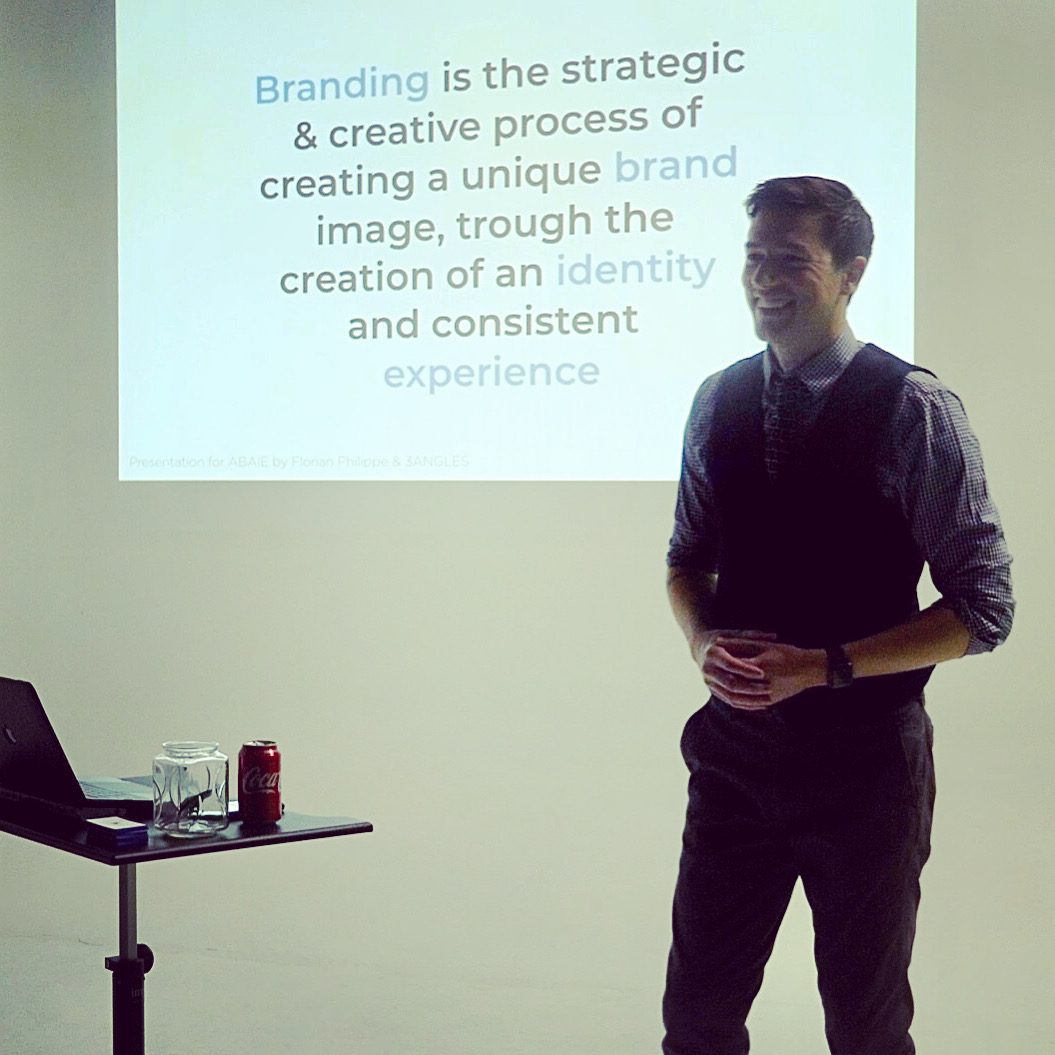
Florian speaking at an Abaie branding session
Abaie branding session · Los Angeles
15+
Years leading brand strategy for companiesAcross six countries, from LA to Taipei. In-house, agency-side, and as a fractional CMO.
25+
Clients and companies shapedFounded and ran 3ANGLES in Taipei. Public organizations, tech companies, consumer brands.
CMO
Two years as fractional and full CMOLaunched Verdant and Cachet from zero to full brand identity and go-to-market.

Every company taught the same thing: the brands that scale aren't the ones with the best design. They're the ones where the founder's clarity became the company's clarity.

Case Studies

Built from scratch. Rebuilt from the inside.

Case Study 01

Verdant Strategies.

Market-ready from day one

Verdant was breaking into a crowded niche, cannabis accounting, and needed more than a website to stand out. As their founding CMO, I built the brand from the ground up: positioning the firm as a strategic advisory partner, not another service provider.

We built a content and PR engine that kept the brand visible, consistent, and trusted. A scalable foundation the team could run without rebuilding every quarter.

Outcome
From unknown to nationally recognized in its niche.

Case Study 02

Cachet.

A modern CPA brand with substance

When Cachet came to me, the firm had no name, no brand, and no online presence... just a great team and ambition. I led the naming and positioning process that became "Cachet," and crafted a visual and verbal identity that was both elevated and approachable.

The brand now reflects the caliber of the work they've always delivered... and attracts high-quality leads with minimal ad spend.

Outcome
Launched as a premium boutique firm in LA.
In Their Words
Florian brings a rare combination of vision and execution. He sees the big picture with a high-level, strategic perspective, yet he's equally skilled at rolling up his sleeves to deliver results on the ground. Every detail he touches is intentional, crafted to serve a larger objective and move the company toward its goals.
Kevin Meredith
Founder · 4th Sector Innovations
How It Works

Four phases. Four to eight weeks. One brand the whole company can execute.

01

Strategy Call

A real conversation with leadership. No pitch, no proposal. We figure out if this is the right move and what success looks like for the company.

02

Diagnosis

Stakeholder interviews, competitive audit, internal positioning map. Where the team agrees, where they don't, and why.

03

Strategy Build

Positioning, messaging architecture, voice, visual direction. Pressure-tested against sales, product, and leadership before anything ships.

04

Rollout

Internal alignment sessions and a clear implementation roadmap. Your team walks away with the plan and the authority to run it.

Investment

One engagement. Built to your company.

Company brand strategy isn't a fixed-scope product. It's built around your size, your team's involvement, and the depth your market demands. The first call is about figuring out what you actually need.

Company Brand Strategy
Starting at$5,000

Scope is shaped on the first call. Most engagements land between four and eight weeks, depending on team size and decision surface.

Includes positioning, messaging architecture, voice guidelines, visual direction, and the implementation roadmap. Agencies bring teams. I bring clarity. No account manager between you and the strategy.

Start with a strategy call

Questions before we talk.

Typically 4 to 8 weeks depending on scope and team availability. The strategy phase is concentrated. The implementation roadmap gives your team a clear path forward without stalling ongoing work.
Yes, for the parts that affect them. Brand strategy works best when leadership is aligned. I'll tell you exactly who needs to be in which sessions, and I'll respect everyone's calendar. Most people end up in two or three touchpoints, not twenty.
Agencies bring teams. I bring clarity. There's no account manager between you and the strategy. You work directly with someone who's done this as a CMO, not just as a consultant, so the recommendations are built to survive a real company, not a pitch deck.
No. The engagement is designed to run in parallel with whatever your team is already shipping. The rollout phase decides what changes now, what changes next quarter, and what doesn't change at all.
The work lives upstream of them. Your designers, writers, and agencies get a document that tells them what the brand is, who it's for, and how it shows up. They do their best work when someone has already done the strategic thinking. That's the gap I fill.
Not a mood board. A strategic document your team can execute from: positioning, messaging architecture, voice guidelines, visual direction, and an implementation roadmap with priorities and owners.
Company brand strategy starts at $5,000. Scope depends on company size, team involvement, and deliverable depth. The first call is about figuring out what you actually need, not talking you into more than that.

This work starts with a conversation.

No pitch. No proposal on the first call. Just clarity on whether this is the right move for your business right now.

Book a strategy call

Not the right moment? The Brand Therapy Weekly goes out every Tuesday... clarity in your inbox.